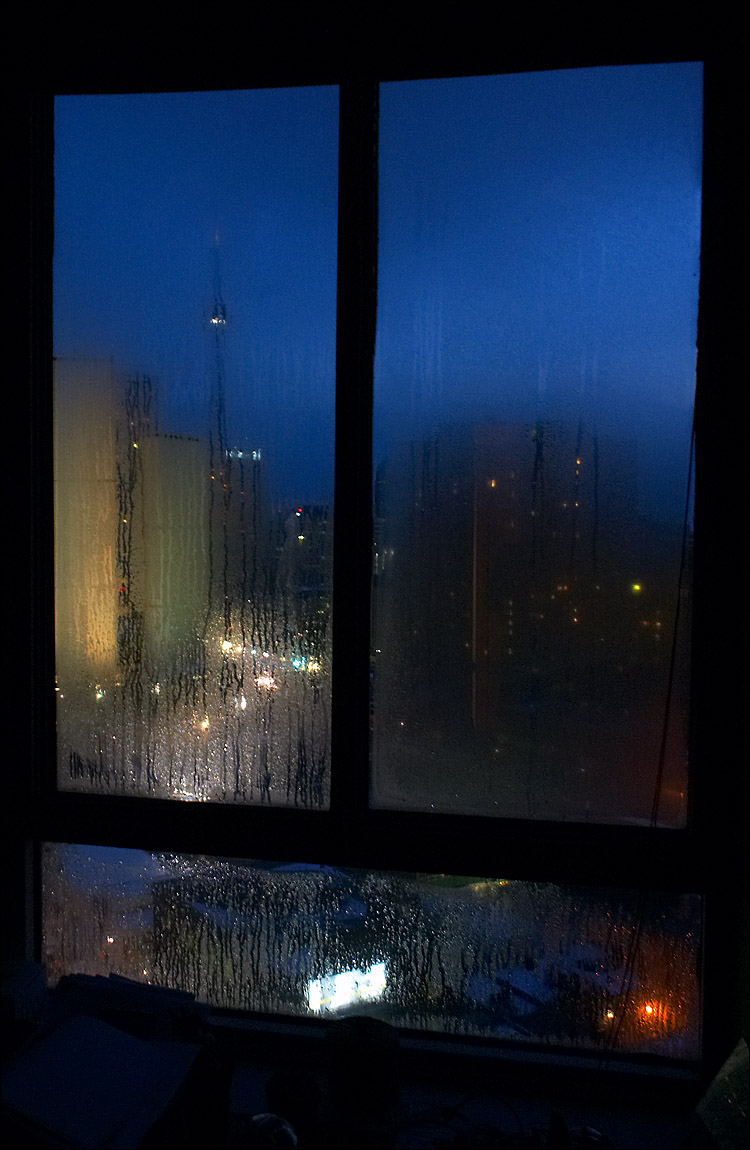
Saturday, November 27, 2010

Family Teaching

Tonight I got to spend a lot of quality time having a very delayed (and also very delicious) thanksgiving dinner with my extended family.  This means twenty minute debates about pie crust from people who you don't expect to debate the finer details of dessert, it means book recommendations (my Grandpa likes Obama's, someone else called him an Obamaniac), it means hearing my cousin recite a terrific speech she gave at an Ups for Downs fundraiser (she killed), and it means that down in the basement below all this conversation, a horde of young cousins are hacking away at one another wearing bedsheet capes and weaponry improvised mostly from cardboard and duct tape (although that craft has gotten incredibly more sophisticated recently, pvc pipes, CDs cut into shapes to decorate the pommels of impressive weapons, imaginative stuff).
Seriously. This stuff. Twenty minutes, maybe half an hour of conversation
Although, I do get to eat the topic of discussion, so it maybe breaks even.
   But lately, I'm coming to realize that having the chance to catch up with all of the teachers and former educators in my family is one of the most interesting and valuable parts of these gatherings.  Before I'd looked into teaching as a career, they had always had a certain teacherly air, and occasional stories about a class or a student or the profession, but now, my ears are open.  When they start talking about teaching, I lean forward and start to pull out the valuable stuff, the need-to-know's and the if-they-woulda-told-me's.  I try and tattoo that sort of thing onto the inside of my brain, in one of those gray lobe-y folds where it won't get erased by some mental janitor who stumbles over neurons.  Even more fun than listening, I get involved.  Established teachers can't be the only ones who get to hold the floor here, I just had to listen to these people talk about the ratio of butter and shortening in pie crusts for crying out loud, and really, it's more holding the table than the floor anyway.

Monday, November 15, 2010

Growing Up, Not Grown Up

Looking around at other people's blogs, I see a lot of people talking about what it's like to be getting older.  My whole life, I've had a brother six years older than me to look up to and measure as a standard for growing older.  He's left home, gone to college, and gotten married (in September), but as I followed a similar path, I began to see my brother differently and understand that growing up doesn't have to mean becoming a grown up.  Maybe I first noticed this when he came home from college for spring break and played with LEGOs in the basement, or maybe it was when he decided to have "Here Comes the Bride" played on kazoos at his wedding; either way, it helped having someone who wasn't quite a parent to point me in the direction of figuring that out.  It helps to think of this when I'm trying to remember that life is more than just a tug of war between wishing to be older and wishing to be younger.

Wednesday, November 10, 2010

Autobiography

           I just realized I meant to post my autobiography but never did.  So since I spent more time than I should have sifting through old Xanga posts, I think I deserve the extra mileage out of it.

Sunday, October 31, 2010

Swan-Road

     I actually really enjoyed reading some of the history behind English writing in the Williams article.  Besides the fact that I think historical influence on writing are intensely interesting, I really enjoyed seeing an example of what we might write in "modern Anglo-Saxon."  After reading Beowulf and getting to see that kind of language and some of the stylistic devices used in old pieces of writing, it got me thinking about how language has changed and how it keeps changing.
     Some of the devices used in Beowulf encouraged me to see what I could pull back into my own writing.  As a specific example, the use of kenning was something that really intrigued me.  Being able to replace "ocean" with "swan-road" or something similar really sparked my imagination.  There are so many ways of incorporating devices like this into modern writing, kenning is not so different than metaphor (although I think it is capable of something so interestingly different.  You can make the language so powerful and compact by giving your reader "swan-road" instead of saying the ocean looked like a road for swans.  One way the language falls flat, but by having the ability to quickly describe a metaphorical relationship and move on, an author can make it work.)  That was a longer tangent than I expected, so I'll get to a point:  if we consciously consider our language we can find so many ways of making it new and exciting, and that is something that as a teacher or a student, is hard to pass up.

Monday, October 25, 2010

Memoir

Maybe not this much, but a lot.
I think I've finally gotten my memoir where I want it.  Looking over all the different drafts and activities and the reflection (which is just about as long as the memoir itself), I'm struck by how much thought and effort really has gone into this best draft.  With most projects, I can get away with dashing off a quick first draft and turning that in, but even with those, there is a lot of thought that goes into my work that remains off the page.  Being able to feel the different drafts and activities and include the reflection really helped me to get a sense of just what accomplishing this draft really means, a perspective I don't often get.  Although I may be bordering on straight-out-of-the-book kind of hokey, I think this sense of accomplishment that is separate from the grade is something really worthwhile that we can pass on to our students.

Sunday, October 17, 2010

An Invitation, More Than Anything, Really

  Whenever we talk about the outrage of good teachers, it can be intimidating.  I can see wanting to do your best and give your students every possible advantage, every opportunity for high level learning, but sometimes I find myself thinking, What if I don't have enough of that passion, that teaching fire, to make me into one of Taylor Mali's miracle workers?  What if I fall into complacency, content to just do my job and survive the daily grind?  Maybe I haven't yet gotten completely comfortable with the idea that I am somehow capable, somehow privileged enough to be able to teach these kids anything.  Who am I to say what's important or what they should know?  It's hard, being expected to have all the answers, especially as someone who's just figuring out their own life.  Thoughts like this get me into trouble.  Sometimes I feel like I might not be able to muster up that desire to teach students for their own sake.
Caliban
  Tonight, though, some thoughts connected, their vaporous ends drifting together and then hardening into ideas.  Maybe I shouldn't worry about teaching them for their own sake.  Not every Terry or Sam has to know everything when they leave my class.  The end of their year with me doesn't mean they will be thrown into the unwilling arms of the world.  I don't have to fan a classroom full of sparks into bonfires, consuming information like kerosene.  I don't have to make every single one a lifelong learner, I can't.  I can show these students my passion for stories, for prose, poetry, and the written word.  I can invite them to walk onto the page with me and together, crunch through that crisp white field like snow, trailing our fingers against the wrought iron letters until worlds erupt from beneath that icy surface and Caliban and Harry Potter stroll among us.  This more than anything is what I think will keep me going.  Really, I'm teaching myself the joys of writing and coaxing them to follow.

Anyway, here's a poem: Teacher Answering Young Radicals - Stephen Dunn

Monday, October 11, 2010

Expectations and Tools

This has been a hectic week, already.  One thing I've tried to glean from the rushing around and flurrying fingers over the keyboard, is that it's important for teachers to remember what it's like being a student.  I think teachers could benefit from not only remembering the experience of being a student, but also from relishing that memory.  We should strive to remember the chaos of different classes and assignments, the difficulty of multiple deadlines, and even the pull of social lives.  What I've gotten from this is a desire to retain my sense of understanding.  This understanding seems to breed honesty and respect within the student teacher relationship and it's important not to lose either one.

On another note, camping at lake MacBride this weekend was an incredible change of pace even if I end up paying for the relaxation later.  Tip for the wise: remember a flashlight.

Monday, October 4, 2010

Nothing

So after spending close to half an hour surfing the internet and trying to come up with something to write about, I decided to write about, dun dun dun, not knowing what to write about.  It's a frustrating feeling.  I remember in high school I would often have the same feeling with assignments that were open ended.  I was always ready to try and satisfy the requirements of a given assignment, but when those requirements where so loose, I got lost.  I'm not saying I wouldn't try and make assignments my own or that I wouldn't be inspired by my teachers; I would, but all while working within the guidelines.
One of those lazy days.

I have this vague childhood memory of falling asleep in a pool.  I remember floating on this hot summer day, sunlight pouring from the sky and cool water pushing me up.  In my mind, it seems like one of those lazy days where the long arduous journey up to the kitchen is unthinkable until your thoughts, like scattered sheep, are gathered together by your snarling stomach, snapping at them from the end of its intestinal chain.  I remember cracking my eyelids and letting my eyes fill with sunlight until they opened completely on their own.  Then I realized I was floating.  In the deep end.  My arms chopped the water, my legs tornadoed around aimlessly beneath the surface, and my heart ground straight from first gear to fifth.  I made it to the side of the pool, got out, and didn't tell a soul.  Now, I'm not even sure if it happened, but that feeling of being asleep and adrift stuck with me, sluggish at the idea of possibilities whether they are for what to do on a summer day or what to write about.  Maybe this anecdote doesn't have more than a spider's thread connection to working with open guidelines, but I like it anyway, so it stays.  Besides it has got more to do with that topic than this: Awkward Family Photos.  That's all folks.

Saturday, September 25, 2010

Regifting

Trevor Smith, on of my close friends shared this gold nugget of inspiration with me not too long ago and I thought I'd pass it along to some people who might appreciate it.  Occasionally, if the mood of a story allows, I'll listen to this: Rainy Mood.  For an even more interesting musical experience, combine with: Godot - The Fragrance of Dark Coffee.  The Result is: --->

Sunday, September 19, 2010

Writing Aloud

It's not uncommon to encounter someone talking to themselves and when they realize they've been noticed, offer the explanation, "I was just thinking out loud."  The readings for this week got me thinking about how this practice of thinking aloud is so common and acceptable while taking a similar approach with writing is so rare.
I consider myself a practiced writer, fully able to succeed at the college level, but I'm also somewhat of a result of the product focused approach to teaching writing.  In the entirety of my high school career, I can't recall ever being told to learn as I write, or to focus on my own writing process.  I was frequently told to examine the writing of others, pull out themes, symbols, and images, but there wasn't any time left for concentrating on the act of writing.
Somehow, I survived this instruction and ended up with the writing process I have now, a writing process that is both recursive and filled with discovery.  This discovery is present in all my writing, but seems easiest to find in fiction.  With a creative writing piece, I start typing with an empty page and only a vague awareness of what comes next, I am more in pursuit of a feeling, a sense of rightness, than any specific plot or series of events.  As I proceed with the piece, I find myself surprised at where I end up, nudged in new directions by my own characters.  For me, this act crystallizes the idea of learning through writing.
Because of my own experience, I feel confident about encouraging others to practice this "writing aloud" method in their own writing.

Sunday, September 12, 2010

Writing or Writing

As I continue to work on my writing memory, I can feel myself changing gears and the way I understand and interact with this piece.  Originally, it was just an in class exercise, similar to countless other in class exercises I've done, a scribbled down account of some dusty memory, jumbled up and only half remembered.  While talking through what I'd written, new details oozed out of cranial crevices (stickers of crazy bloody shot eyes, twist ties, Cat's Eye).  As I went back and typed up the memory, expanded it out and then edited it back, I could feel the shapeless cloud of the original memory solidify into a mass of details and feelings.  It became a mass crafted and given form by the words set onto the page.
My writing process.

Now, I had a sense of white this piece was, what it would turn out to be.  It was just an account of something that happened to me.  I'd been writing stuff like this since Mrs. Powers's first grade class.  When we went back to these drafts in pairs, I got my draft back with comments like, "show don't tell," "love this image," and "be more specific."  I was surprised, not because I was unfamiliar with that kind of feedback, but because I was so accustomed to seeing those exact phrases on my fiction pieces.  Something clicked.  After that, I thought about the draft differently.  It jumped the gap between my Teaching/English Literature classes and my Creative Writing classes, landing squarely in the land of creative non-fiction.

Sunday, August 29, 2010

In the beginning, there was an introduction.

Starting this blog feels something like finding a dusty brown seed by the side of the road and deciding to bury it in my back yard.  I don't know what strange plant may creep out of the dark soil, but by waiting and nurturing it with a light sprinkling of thoughts and insight, I hope to see it sprout, revealing new flowers and fruit to be digested with eye and intellect.

Like so.

And now, the introduction.  My name is Mike Wilson and I am twenty years old.  I'm beginning my Junior year at the University of Iowa with a major in English/Creative Writing and I'm looking to add Secondary Education to the list.  The process of teaching writing interests me in many different ways as both an avid reader and a student of creative writing.  Approaching writing as a subject to be taught as well as learned provides me with new ways of thinking about what I'm doing here and what I could be doing differently.  I'm looking forward to finding new ways of seeing and teaching writing from the blogs of my professors and fellow classmates.

While I was wildly clicking my way around the Internet, looking for an appropriate name for this blog, I paused on this quote by Anton Chekhov, "Don't tell me the moon is shining; show me the glint of light on broken glass."  I'd like to keep that here as a way of reminding myself where this blog can go and what I'd like to watch it become.  This concludes the first post in my ongoing blog for Approaches to Teaching Writing (8N:141).  Stay tuned for more.